As a mom, an educator with over 20 years of experience, and a Registered Psychotherapist, my purpose is clear: to protect and nurture the children of our ummah and to support Muslim families as they heal, grow, and thrive. It is both my passion and the purpose that Allah has entrusted to me. This is not just what I do. It is who I am.
For the last decade, I have devoted myself to helping Muslim moms break the cycles of intergenerational trauma. Our kids deserve better. They deserve the chance to live free from harm, to feel safe in their own homes and communities, and to grow into confident, compassionate believers who are steady in their faith and resilient in the face of life’s tests.
As a mom, I know the desperation of wanting to protect our kids from harm while watching them grow up in a world that terrifies us, a world that often feels dangerous and uncertain, nothing like the world we have worked so hard to create for our kids. And I know the obstacles we face when our mama bear instincts turn into reactive patterns that come from a place of fear rather than from trust in Allah, our own emotional wellness and nervous system regulation, and the clarity that can only come from a calm and wise internal state.
As an educator, I have witnessed children struggle in ways that weigh far too heavily on their small shoulders. I have also seen how the right support, given in the right moment, can open new doors for learning, confidence, and connection.
As a therapist, I have seen how struggles shape our children from the inside out, but also how safe, creative, and faith rooted support can bring them back to balance and change the trajectory of their lives. This kind of support lays a solid foundation for a future for our kids that is filled with resilience, confidence, trust in Allah, and the resourcefulness to thrive from a place of humility, strength, and hope. It is my hope, in shaa Allah, that these reflections give you both understanding and encouragement as you walk this path with your child.
Our children and Islamic values
As Muslim parents, we know that our children are growing up in a world with harmful influences that go against our Islamic values and put their deen and akhirah in danger. They are exposed to messages and behaviours that can confuse them, create resentment towards their families, and turn their hearts away from what is most pleasing to Allah ﷻ.
It is important for us as parents to create spaces where our children can safely process their emotions and experiences without fear of judgment or shame. Some of the best ways we can support them in this are by facilitating reflection, connection, and expression through art, story, and play. These simple everyday practices give children pathways to begin making sense of their struggles while also allowing parents to guide them with compassion and wisdom. In this way, our faith is not presented as a list of prohibitions, but a source of mercy, balance, and guidance that helps kids feel safe, loved, and connected to Allah.
Why understanding how stress impacts our kids matters
Alongside these spiritual challenges, our children also carry the weight of everyday stress. Peer pressure, low self-esteem, and conflict at home can all shape how they see themselves and how they cope with the world around them. The mounting weight of never feeling good enough, the pressure to fit in, or the fear of change or loss within their family can weigh heavily on a child’s heart. Add to this the constant exposure to outside influences such as social media, books, television shows, movies, and even friends, and it becomes clear that kids need safe ways to release stress and build resilience.
To truly support them, we need to look at what happens inside their brains when stress takes hold.
Stress in the developing brain
Cortisol, also known as the stress hormone, plays an important role in child development. It is not only a signal of stress. It also actively shapes how a child’s brain develops, influencing things like memory, learning, and emotional growth.
When cortisol levels remain high for long periods of time, the impact can be harmful. Studies show that children with higher long-term cortisol tend to have smaller hippocampal volumes. What this means is that the very part of the brain that helps with forming new memories is not developing as fully as it could.
Even within the first three months of a school year, researchers have observed a measurable rise in baseline stress, especially for children who are anxious, sensitive, or navigating ongoing struggles at home.
The hippocampus and the prefrontal cortex, the areas of the brain responsible for memory, focus, and emotional control, are still developing during the school years. Chronic stress can interrupt their growth, making it harder for children to learn, regulate, and thrive.
It is important to recognize that what we as adults may dismiss as small stressors can feel very different for a child. A forgotten homework assignment, a harsh word from a teacher, or being left out at recess may not seem significant to us, but to a child’s still developing brain and body, these moments can register as major stress events. What looks minor from the outside can carry real weight on the inside, and when these small stressors pile up over time, chronic stress can turn into developmental trauma, reshaping how a child’s brain and nervous system respond to the world.
How stress shows up in children
Stress in children does not always look like worry. Sometimes it shows up as zoning out, forgetfulness, emotional outbursts, or a freeze response. It can also show up in the body with stomach aches, headaches, sleep difficulties, or even bedwetting.
As Dr. Ross Green, author of The Explosive Child and Lost at School, reminds us, kids do well if they can. His message is simple but powerful. Children want to do well, but if they are lagging or lacking in certain skills, we often see challenging behaviours. Instead of labelling these as problems, Green encourages us to reframe them as areas where a child needs support in skill building.
This is where our role as parents and caregivers becomes one of detectives. We pause, put on our detective caps, and ask ourselves, why is my child not coping right now?
During my training with the York Region District School Board, I was taught the acronym HALT: hungry, angry, lonely, tired. It is a simple starting point for assessing a child’s needs. We can also ask, are they sick? Are they stressed by something else? Beginning here helps us move from judgment to curiosity.
In behavioural theory, one might look at the goals of misbehaviour, such as escape, attention, or sensory needs. In Adlerian theory, the focus is on mistaken goals and unmet needs behind the behaviour. Either way, the point is the same: when we look deeper, we can see that children are not giving us a hard time. They are having a hard time.
This is where thoughtful, well-matched therapy can help. A skilled therapist can gently assess a child’s unmet needs and support both the child and family in meeting them so that the child can thrive and feel emotionally safe.
Why some forms of therapy can do more harm than good
While therapy can be incredibly healing, not every approach is equally safe for children. Traditional counselling often depends on talking through struggles in detail. For adults this can feel intimidating, but manageable. For children, however, it can be frightening. Asking a child to sit down with a stranger and explain what is happening at school or at home can actually spike their stress hormones and reinforce the very stress response we are trying to ease.
When children are pressed to put their inner world into words before they are ready, it can actually increase cortisol levels and strengthen the brain’s pathways of stress. And sometimes, there simply are no words. A child who is being bullied every day at school, or who is shaken by ongoing conflict in their home, may not have language for what they are living through. Sometimes the brain protects a child by disconnecting them from overwhelming experiences, a coping mechanism known as dissociation. In those moments, asking for words is not just difficult. It is impossible.
How we can safely support our children
So how can we support children without adding to their stress or pushing them beyond what they can manage? The answer is to create safe pathways for expression that do not depend on language alone.
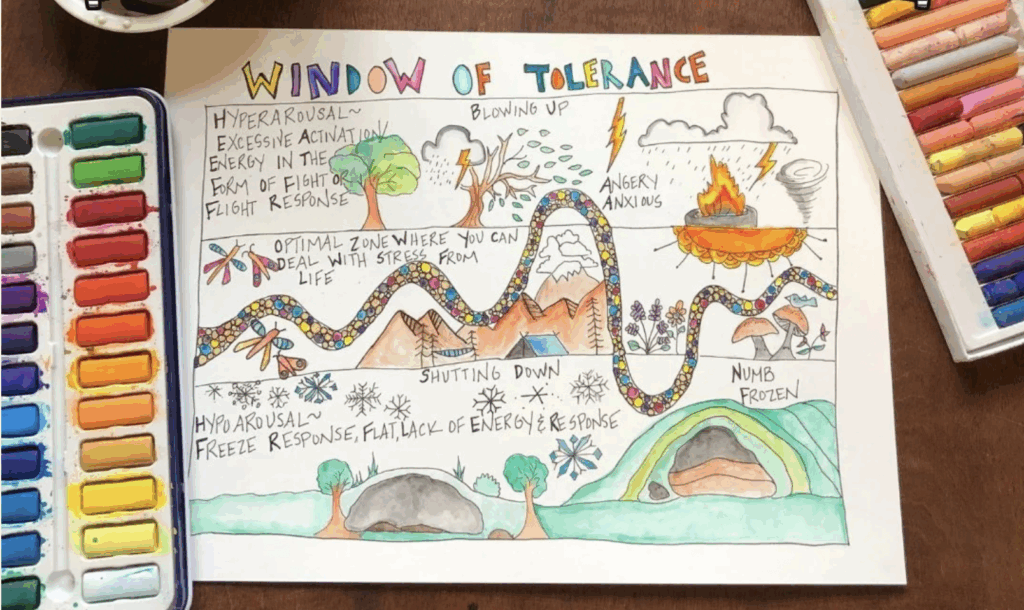
Our kids need play and creativity so they can explore their inner worlds free from judgment and without being pushed out of their windows of tolerance. When children feel overwhelmed, their brains often shift into survival mode, showing up as fight, flight, or freeze. This often results in disconnect from their own strengths and resources. It is not a weakness but a coping mechanism, because the brain is designed to protect them from extreme distress. Over time though, this survival response can leave them feeling helpless, stuck, and sometimes even hopeless.
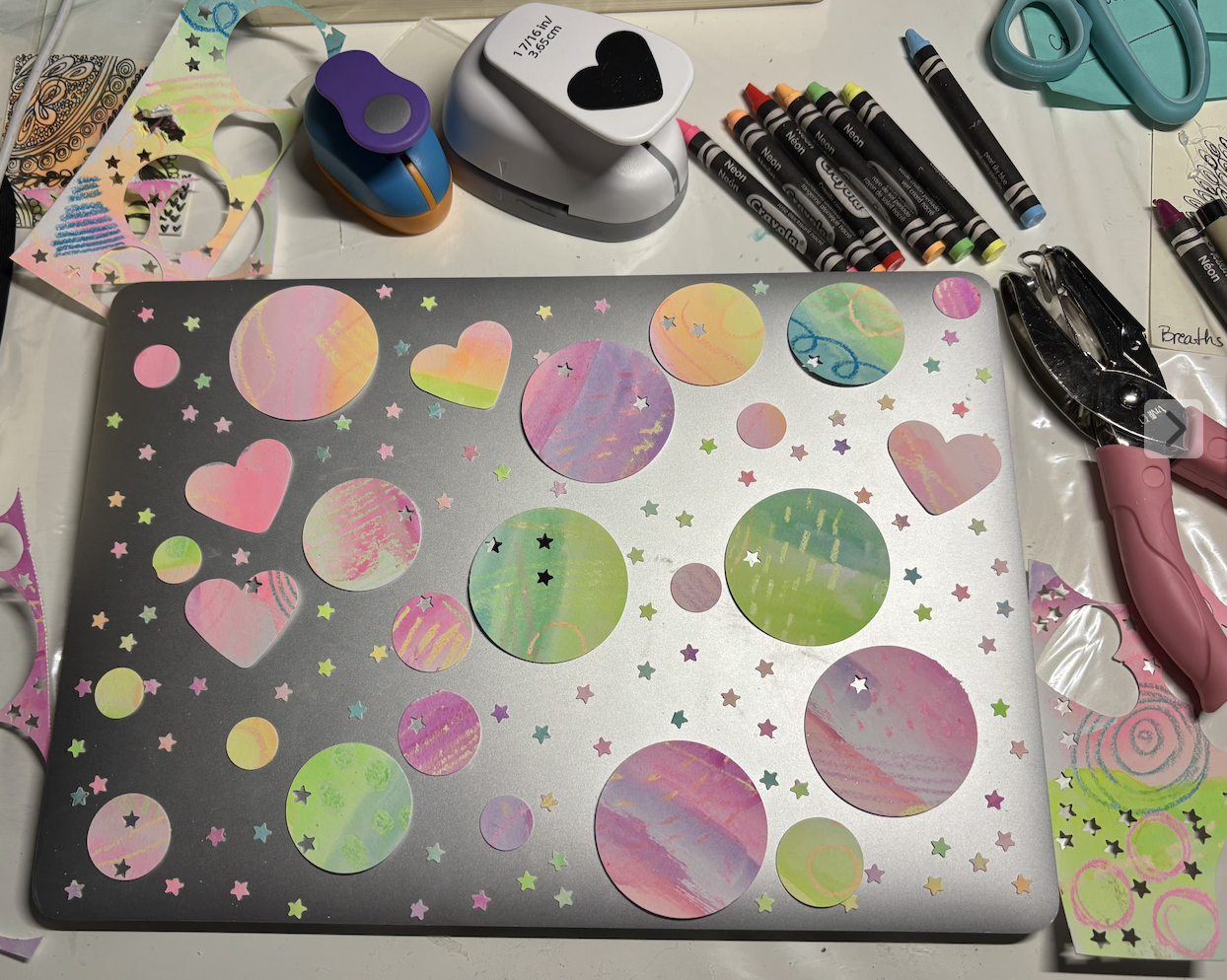
A child experiencing peer pressure at school may find solace in expressing their frustration through drawing. A child shaken by ongoing conflict at home may find release in painting or clay. A child who doubts their worth may discover confidence by writing and illustrating their own story, or by building a playful creation with popsicle sticks, feathers, and googly eyes. These forms of expression allow the nervous system to discharge stress and begin to heal in gentle, playful ways.
For many children, creative and body-based approaches feel different. They bring calm instead of adding pressure, and they help uncover and strengthen a child’s natural curiosity, resilience, and resourcefulness.
The role of safety
Research confirms what we see in practice. Supportive, creative environments can change the stress response in children. Mindful movement and breathing exercises in classrooms over just ten weeks lowered stress hormones and improved self-regulation. Spending time with gentle animals in a supportive environment significantly reduced cortisol in both neurotypical children and those with special needs.
What makes the difference is not the removal of every challenge. It is the restoration of safety. Safety is what gives the brain permission to grow. It is not about making problems smaller but about making children bigger, expanding their capacity to handle challenges. This expansion comes through play, imagination, and creative processing.
Supporting our kids with what they need most
Safety is nurtured through predictability in relationship dynamics, routines, and environments. When children can trust how the people around them will respond, when their days follow steady rhythms, and when they know their mistakes will be met with gentleness and compassion, their nervous systems learn to rest instead of staying on guard. Ultimately, children thrive when they know their whole selves are welcome.
Our kids need environments that calm their nervous systems and help them feel steady again. They need play and creativity that allow them to explore their inner worlds free from judgment and without being pushed out of their windows of tolerance. Such overwhelm often results in disconnect from their own strengths and resources. This is not a weakness but a survival mechanism, and over time it can leave them feeling helpless, stuck, and sometimes even hopeless.
They need gentle encouragement that reassures them they are still safe when they mess up, and that mistakes are a natural part of being human, helping us learn and become better each day. Every challenge a child faces is also an opportunity to remind them of who Allah is. To remind them of His mercy, His generosity, and His kindness. That He is Al-Ghafoor and Al-Raheem. As the Prophet ﷺ said, “Every son of Adam makes mistakes, and the best of those who make mistakes are those who repent.” We want our kids to know that their mistakes are opportunities to learn and grow. And, as parents, these moments are perfect for teaching them about Allah’s compassion and reminding them to turn back to Him.
Listening beyond words
A child’s behaviour is often their nervous system speaking for them. Expressive Arts Therapy is designed to listen in these non-verbal ways. It allows children to work through stress and emotion at the pace their body and mind can handle, giving them room to heal without being pushed into conversations they are not ready for.
This is what makes Expressive Arts Therapy so different from talk therapy. It honours the natural languages of play and creativity, helps regulate the nervous system, and restores the sense of safety children need to learn, connect, and grow, both in themselves and in their faith.
My invitation to you
If you see your child struggling with stress, peer pressure, low confidence, or the weight of influences that do not align with our values, know that you are not alone. Expressive Arts Therapy offers children a safe and creative way to work through what they carry, without fear of shame and without being forced into conversations they are not ready for.
At Muslimah Therapy, I hold space for children to play, create, and express themselves in ways that calm their nervous systems and nurture their connection to Allah. Here, therapy is not about fixing what is broken. It is about giving children what they need most: safety, compassion, and gentle guidance that allows them to grow strong in both heart and faith.
If you would like to explore how I might be able to support your child or teen, please feel free to book a no-commitment discovery call.